2022, un año de reconfiguración y renovación
El año 2022 ha representado para nuestra
revista un año de esfuerzos continuos para asegurar la aparición de la revista,
en un contexto económico y social bastante marcado por lo ocurrido durante los
años anteriores (2020 y 2021).
Por diferentes motivos, objetivos o
subjetivos, el año pasado algunos de nuestros más antiguos colaboradores
cesaron su colaboración con la revista y el equipo de traductores se redujo un
poco. De la primera categoría, cesaron su colaboración a lo largo de los años
2021-2022 algunos autores con una presencia duradera en la revista, como
Douglas Lipton y Morelle Smith (Reino Unido), Pascal Dague (Francia), Ioan
Stanomir (Rumanía), Ettore Fobo (Italia), Ana Bazán (Argentina) y algunos
otros, y del equipo de traductores, Elena Ţăpean, que colaboraba con
traducciones desde el año 2015. Esta es una dinámica normal, de hecho, con la
que siempre nos hemos confrontado a lo largo de los 14 años de existencia de la
revista.
Por otro lado, mencionamos con
satisfacción el buen desarrollo de los departamentos de lengua francesa y
española, de los que se encargaron con competencia y perseverancia, durante
todo el año, Noëlle Arnoult y Monica Dragomirescu, quienes aseguraron tanto una
buena parte de las traducciones, como una renovación constante del colectivo de
colaboradores.
A finales del año 2022 la revista tenía
colaboradores (poetas, prosadores, ensayistas) de Francia, España, Holanda,
Alemania, Rumanía, Croacia, Escocia, Estados Unidos, Canadá, México, Chile,
Argentina, Brasil etc. Para una publicación que no se beneficia de ninguna
subvención del estado, no es poca cosa, teniendo en cuenta además el valor
excepcional de algunos de estos colaboradores, como también el apego a la
creación y al arte de los otros colaboradores.
Aparte de los redactores coordinadores,
tuvieron una presencia constante a lo largo de todo el año 2022 los autores
Jacklynn Beckman (Francia), Marie Cholette (Canadá), Francisco da Cunha
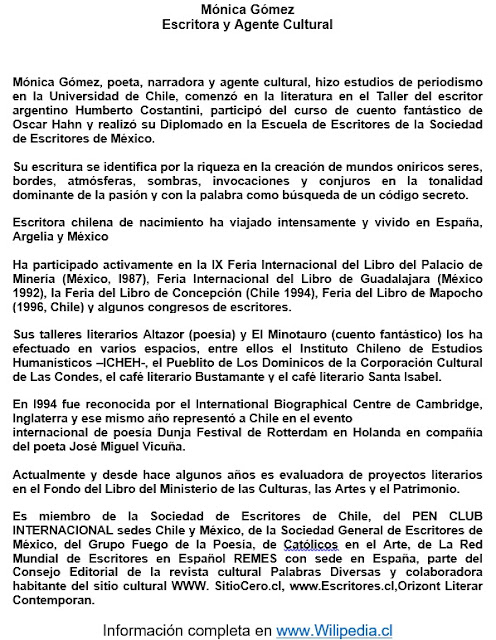
(Brasil), Frédéric Fort (Francia), Mónica Gómez (Chile), Jean-Claude Jayet
(Francia), Serge Lapisse (Francia), Milagros López (España), Patricio Henríquez
Lorca (Chile), Julien Miavril (Francia), Kees van Meel (Holanda), Donald Riggs
(Estados Unidos), Francisco Sánchez (España), Jean-Claude Sartelet (Francia),
Ana-Muela Sopeña (España), E.A.C. Lenoble (Francia-Rumanía), John Tischer
(México-Estados Unidos), María Alejandra Vidal Bracho (Chile), Michael White
(Estados Unidos). Entre los colaboradores de Rumanía, fueron publicados a lo
largo del año pasado el profesor universitario Gheorghe Glodeanu, el prosador
Radu Igna, el poeta e hispanista Mihai Cantuniari, el poeta Leonard Ciureanu,
el poeta Nicolae Crepcia etc. Entre los recién llegados, mencionamos al pintor
franco-vietnamita Gérard Dominé y a su hermano, poeta y músico Jean-Claude
Dominé.
En el mes de junio, en Dijon, Noëlle
Arnoult organizó la tercera edición de la manifestación cultural dedicada a
nuestra revista, donde se otorgaron premios de excelencia al poeta Frédéric
Fort, al prosador Jean-Claude Sartelet y al pintor Gérard Dominé, por su
creación y por su apego al programa cultural de nuestra revista, que intenta
armonizar el factor nacional y el internacional en la creación literaria y
artística contemporánea.
Las traducciones fueron aseguradas por
Monica Dragomirescu, Noëlle Arnoult (Francia), Andrei Langa (Rep. Moldavia),
Deborah Jacobs (Holanda), Raymond Walden (Alemania), a los que les damos las
gracias por este medio.
Finalmente, destacamos la continuación de
las apariciones en la colección "Bibliotheca Universalis”, donde fueron
publicados doce nuevos libros, desde el libro número 241 hasta el libro número
252. Estos libros son, en su mayoría, bilingües e incluyen versos, prosa,
evocaciones y son firmados por autores de Rumanía (Nicolae Crepcia, Petru
Istrate), Croacia (Tomislav Bilosnic), Francia (Patrick Rozenfeld, Noëlle
Arnoult), Escocia (Neil Leadbeater), Chile (Mónica Gómez), España (Milagros
Lopez) etc. Con más de 250 libros publicados, tras ocho años de existencia y
con autores de casi todos los continentes, Bibliotheca Universalis puede
figurar en el libro de los récords en el capítulo "editoriales
particulares, que superaron su condición de outsider".
Por ello, iniciamos el nuevo año 2023 con
toda confianza y estamos convencidos de que nuestros esfuerzos en el campo del
trabajo cultural serán recompensados con resultados notables.
2022, a year of reconfiguration and renewal
The year 2022 has represented for our magazine a year of continuous efforts to ensure the appearance of the magazine, in an economic and social context quite marked by what happened in previous years (2020 and 2021).
For different reasons, objective or subjective, last year some of our oldest collaborators ceased their collaboration with the magazine and the team of translators was reduced a bit. In the first category, some authors with a lasting presence in the journal ceased their collaboration over the years 2021-2022, such as Douglas Lipton and Morelle Smith (United Kingdom), Pascal Dague (France), Ioan Stanomir (Romania), Ettore Fobo (Italy), Ana Bazán (Argentina) and some others, and from the team of translators, Elena Ţăpean, who has been collaborating with translations since 2015. This is a normal dynamic, in fact, with which we have always faced throughout the 14 years of the magazine's existence.
On the other hand, we mention with satisfaction the good development of the French and Spanish language departments, which were handled with competence and perseverance, throughout the year, by Noëlle Arnoult and Monica Dragomirescu, who ensured both a good part of the translations, as a constant renewal of the group of collaborators.
At the end of 2022, the magazine had collaborators (poets, prose writers, essayists) from France, Spain, the Netherlands, Germany, Romania, Croatia, Scotland, the United States, Canada, Mexico, Chile, Argentina, Brazil, etc. For a publication that does not benefit from any state subsidy, this is not a small thing, also taking into account the exceptional value of some of these collaborators, as well as the attachment to the creation and art of the other collaborators.
Apart from the coordinating editors, the authors Jacklynn Beckman (France), Marie Cholette (Canada), Francisco da Cunha (Brazil), Frédéric Fort (France), Mónica Gómez (Chile) had a constant presence throughout the year 2022. , Jean-Claude Jayet (France), Serge Lapisse (France), Milagros López (Spain), Patricio Henríquez Lorca (Chile), Julien Miavril (France), Kees van Meel (Netherlands), Donald Riggs (United States), Francisco Sánchez (Spain), Jean-Claude Sartelet (France), Ana-Muela Sopeña (Spain), E.A.C. Lenoble (France-Romania), John Tischer (Mexico-United States), María Alejandra Vidal Bracho (Chile), Michael White (United States). Among the collaborators from Romania, the university professor Gheorghe Glodeanu, the prose writer Radu Igna, the poet and Hispanist Mihai Cantuniari, the poet Leonard Ciureanu, the poet Nicolae Crepcia etc. have been published over the past year. Among the newcomers, we mention the French-Vietnamese painter Gérard Dominé and his brother, poet and musician Jean-Claude Dominé.
In June, in Dijon, Noëlle Arnoult organized the third edition of the cultural event dedicated to our magazine, where prizes of excellence were awarded to the poet Frédéric Fort, the prose artist Jean-Claude Sartelet and the painter Gérard Dominé, for their creation and for its adherence to the cultural program of our magazine, which tries to harmonize the national and international factors in contemporary literary and artistic creation.
The translations were ensured by Monica Dragomirescu, Noëlle Arnoult (France), Andrei Langa (Moldova Republic), Deborah Jacobs (Netherlands), Raymond Walden (Germany), whom we thank for this means.
Finally, we highlight the continuation of appearances in the "Bibliotheca Universalis" collection, where twelve new books were published, from book number 241 to book number 252. These books are mostly bilingual and include verses, prose, evocations and are signed by authors from Romania (Nicolae Crepcia, Petru Istrate), Croatia (Tomislav Bilosnic), France (Patrick Rozenfeld, Noëlle Arnoult), Scotland (Neil Leadbeater), Chile (Mónica Gómez), Spain (Milagros Lopez) etc. With With more than 250 books published, after eight years of existence and with authors from almost all continents, Bibliotheca Universalis can be included in the book of records in the chapter "private publishers, who overcame their outsider status".
For this reason, we start the new year 2023 with full confidence and we are convinced that our efforts in the field of cultural work will be rewarded with remarkable results.
Spanish version by Monica Dragomirescu